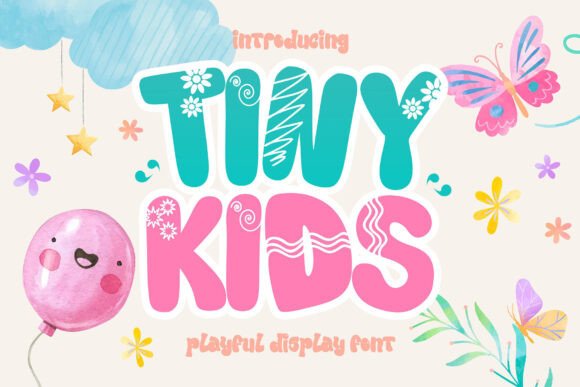
Tiny Kids Font for Enchanting Editorial Designs
Tiny Kids in Lifestyle Blog Redesigns
Tiny Kids is a display font that breathes life into editorial projects with its whimsical charm and playful energy. When I recently redesigned the header of a lifestyle blog focused on family adventures, Tiny Kids became the perfect choice. Its delicate curves and cheerful letterforms immediately conveyed a sense of joy and creativity, aligning perfectly with the blog’s tone.
Using Tiny Kids for the blog’s title and subheadings created a visual rhythm that guided readers effortlessly through the content. The font’s personality helped establish a warm, inviting brand identity without overwhelming the layout. It worked especially well when paired with a clean sans serif font for body text, ensuring readability while maintaining an engaging aesthetic.
Tiny Kids for Recipe Ebook Titles and Chapter Openers
In a recent project, I designed a recipe ebook centered around kid-friendly meals. Tiny Kids was ideal for chapter titles and pull quotes, adding a touch of innocence and fun to each section. The font’s expressive character made it stand out against the more subdued typefaces used for ingredients and instructions.
The use of Tiny Kids in the chapter openers helped break up dense content and provided a visual anchor for each recipe. Readers responded positively to the playful yet approachable feel, which reinforced the book’s theme of making cooking a joyful experience for children and families alike.
I found that Tiny Kids performed best in short bursts—such as headlines, section titles, and decorative accents—rather than long paragraphs or body copy. This made it an excellent companion for editorial layouts that require both visual interest and clarity.
Tiny Kids in Wedding Guide Covers and Branding Elements
For a wedding guide publication targeting young couples, Tiny Kids brought a fresh and imaginative flair to the cover design. The font’s light, airy feel complemented the romantic and celebratory nature of the content. It worked beautifully as a main title, paired with a subtle serif font for the subtitle, creating a balanced and elegant look.
Tiny Kids also added a unique touch to branding elements such as sidebars and infographics. Its whimsical style enhanced illustrations and graphics related to children’s themes, making the guide feel more personal and relatable.
When using Tiny Kids in print materials, I ensured that the font size and spacing were optimized for readability. While it’s not suited for dense blocks of text, it thrives in headline and decorative roles, where its character can shine without distraction.
Tiny Kids for Newsletter Graphics and Pull Quotes
In designing a monthly newsletter for a parenting blog, I incorporated Tiny Kids into the header and pull quotes. The font’s playful nature matched the blog’s focus on child-centered content and helped draw attention to key messages. Its legibility on screen and in print made it a versatile choice for digital and physical formats.
I tested Tiny Kids in various sizes and weights to ensure it maintained its charm without becoming too ornate. It worked particularly well in bold form for callout sections, providing a clear contrast against lighter background colors.
For those considering Tiny Kids for their own editorial work, I recommend checking the font’s available styles, ligatures, and multilingual support. Ensuring it meets your specific needs—whether for a digital magazine, printable planner, or course PDF—is essential for seamless integration into your content layout.
Tiny Kids for Digital Magazines and Course PDFs
When working on a digital magazine aimed at creative parents, Tiny Kids proved to be an ideal choice for feature titles and article headers. Its enchanting appeal resonated with the target audience, reinforcing the magazine’s mission to inspire and educate through creative play.
In a course PDF focused on early childhood education, I used Tiny Kids for chapter headings and activity titles. The font’s youthful energy encouraged engagement and made the learning process feel more interactive and enjoyable. It was important to pair it with a readable sans serif font for instructional text to maintain a clear hierarchy and ensure accessibility.
Tiny Kids is best reserved for display purposes, where its expressiveness can enhance rather than hinder the reading experience. By using it strategically in titles, pull quotes, and decorative elements, you can elevate your editorial design while keeping your content clear and approachable.